
SEO vs. Paid Ads: Which Is Better for Your Small Business?
SEO vs. Paid Ads: Which Is Better for Your Small Business?
If you're trying to grow your business online, you may be wondering about SEO vs. paid ads and which one can help you get more customers. Both SEO for small businesses and paid advertising can bring people to your website, but they work in different ways.
SEO focuses on building your visibility in search engines over time, while paid ads help you reach potential customers by paying for placement.
In this guide, you'll learn how SEO and paid ads work, their key differences, costs, benefits, and when each strategy may make sense for your business.
You'll also see a simple example of how a small business can use both strategies as part of a digital marketing strategy.
1. SEO: Building Visibility Over Time
Search Engine Optimization (SEO) is the process of improving your website so it can appear more prominently in organic search results.
For example, imagine you own a plumbing company in Toronto.
Someone searches:
“plumber near me”
or:
“emergency plumber in Toronto.”
If your website has strong local SEO, useful content, and accurate business information, your business may appear in relevant search results.
Unlike paid advertising, you don't pay a search engine every time someone clicks your organic listing.
What Does SEO Involve?
A small business SEO strategy can include:
Keyword research
Creating useful content
Improving website speed
Optimizing service pages
Local SEO
Google Business Profile optimization
Building relevant links
Improving mobile usability
Updating website content
A Real-World Example
Let's say Sarah owns a small landscaping company.
She creates pages targeting searches such as:
Landscaping services in her city
Lawn maintenance services
Garden design services
How much does lawn care cost?
Over time, these pages can help her website appear for searches related to her services.
The important thing to understand is that SEO takes time. You are building visibility that can continue bringing visitors after the initial work is done.

2. Paid Ads: Get in Front of Customers Faster
Paid advertising works differently.
Instead of waiting for your website to gain organic visibility, you pay platforms such as Google or social media networks to show your ads to selected audiences.
For example, a roofing company could run an ad targeting people searching for:
“roof repair near me.”
When someone clicks the advertisement, they can be sent directly to a landing page where they can request a quote.
Paid ads can also target people based on factors such as:
Location
Search terms
Interests
Demographics
Online behavior
Previous website visits
When Can Paid Ads Help?
Paid advertising can be useful when you want to:
Promote a new service
Generate leads quickly
Promote a special offer
Reach a specific audience
Test a new market
Drive traffic to a landing page
Retarget previous website visitors
For example, James owns a small home-renovation company and wants to promote a new kitchen renovation service.
Instead of waiting for a new SEO page to gain visibility, he could create a paid campaign and direct interested people to a dedicated landing page.
The important thing is to remember that paid ads require ongoing budget. When you stop paying for the campaign, the paid traffic generally stops as well.

3. SEO vs. Paid Ads: What's the Difference?
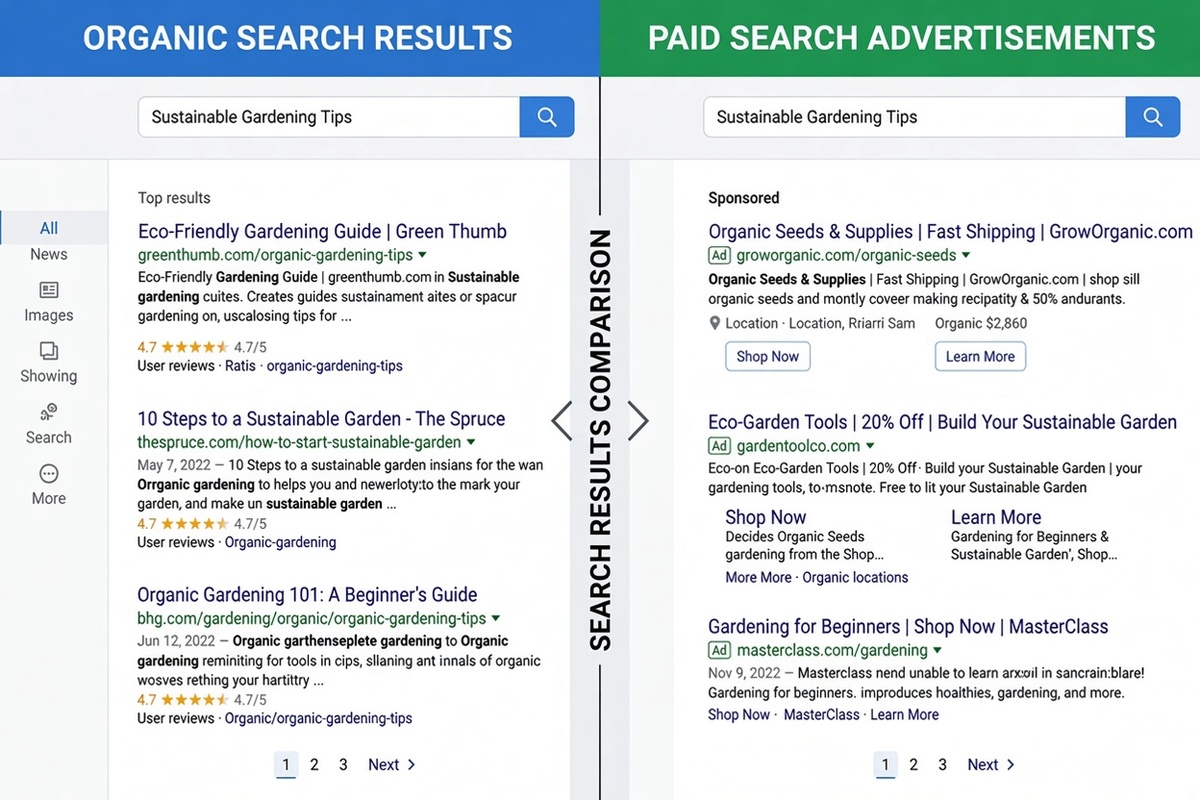
SEO and paid advertising can both bring visitors to your website, but the process is different.
SEO | Paid Ads |
Builds organic visibility | Buys advertising placement |
Usually takes time | Can generate traffic quickly |
Focuses on long-term visibility | Often used for immediate campaigns |
Requires ongoing optimization | Requires ongoing ad budget |
Can attract search-based traffic | Can target specific audiences |
Content and website quality are important | Ad creative and landing pages are important |
Neither approach works in exactly the same way.
Your choice depends on your business goals, budget, audience, competition, and timeline.
4. Which Costs More?
The answer depends on how you measure cost.
With paid advertising, you typically have direct advertising costs. Depending on the platform and campaign, you may pay based on clicks, impressions, conversions, or another advertising model.
SEO may not have a direct cost for each visitor, but it can require investment in:
SEO professionals
Content creation
Website development
Technical improvements
Local SEO
SEO tools
For a small business, it's better to think about return on investment (ROI) rather than simply asking which strategy is cheaper.
For example, spending $1,000 on marketing that generates $5,000 in revenue has a very different outcome from spending $1,000 and generating $500.
Track your:
Leads
Sales
Conversion rate
Cost per lead
Customer acquisition cost
Revenue
These numbers can help you understand how your marketing is performing.

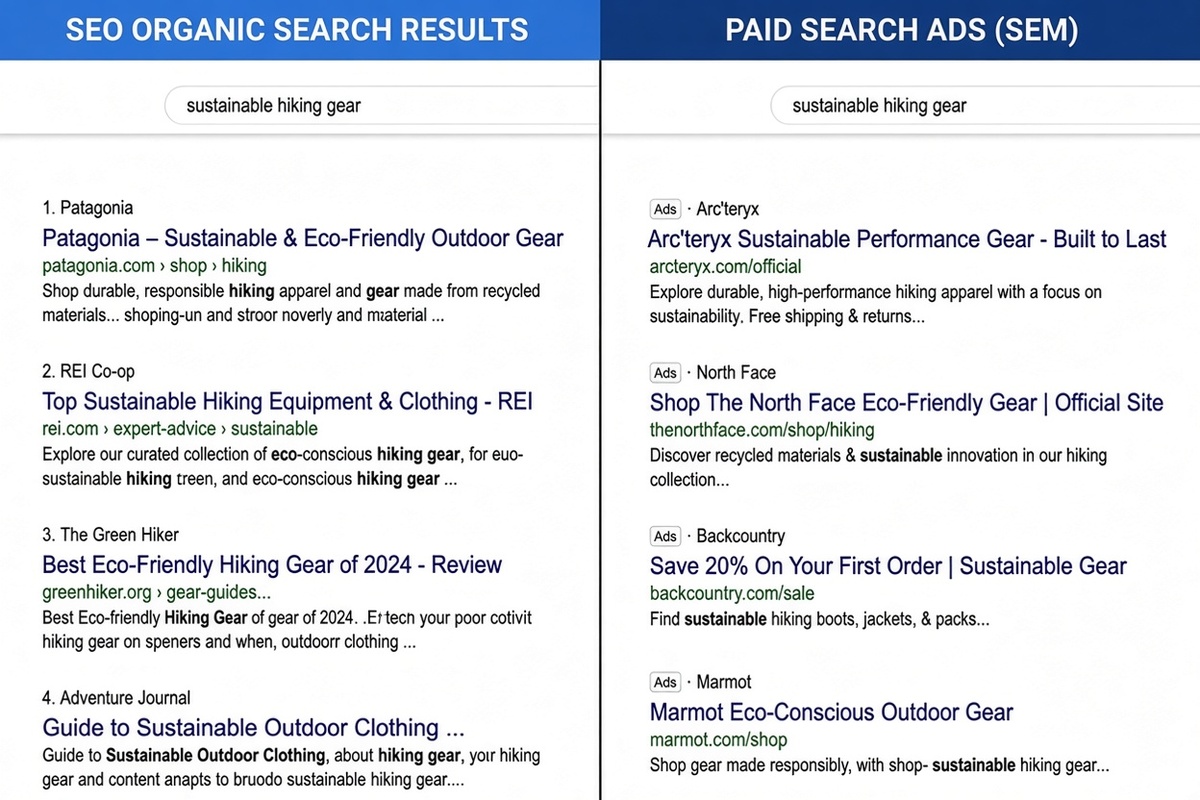
5. SEO and Paid Ads Can Work Together
You don't always have to choose one strategy.
In many cases, SEO and paid ads can support each other.
Think about it this way:
Paid Ads = Immediate Visibility
SEO = Long-Term Organic Visibility
For example, a local dental clinic could use paid ads to promote teeth whitening while also investing in SEO content targeting searches such as:
Teeth whitening services
Dentist near me
Professional teeth whitening
Cosmetic dentist in [city]
The paid campaign can help bring immediate attention to the service, while SEO helps build organic visibility over time.
Paid campaigns can also provide useful information about which messages, offers, and keywords attract clicks and leads. Those insights can help inform future marketing content.
6. Don't Forget Your Website
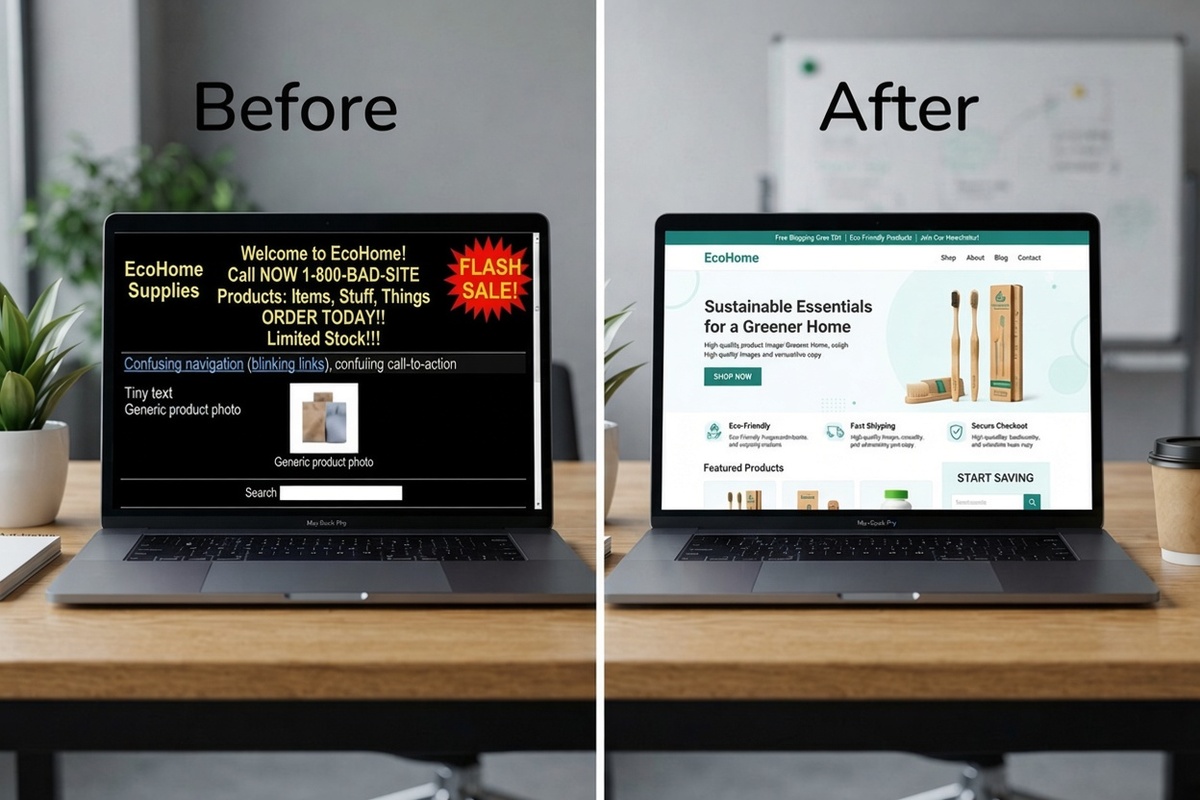
Whether someone arrives through Google search or a paid advertisement, they still need a good website experience.
Imagine paying for 1,000 ad clicks but sending those visitors to a slow, confusing website.
You could be paying for traffic that never becomes a lead.
Before investing heavily in either SEO or paid ads, make sure your website has:
Clear messaging
Strong calls to action
Fast loading speed
Mobile-friendly design
Simple contact forms
Trust signals and reviews
Relevant landing pages
Easy navigation
Your marketing gets people to the door.
Your website needs to give them a reason to walk in.
7. How to Choose the Right Strategy for Your Business
Instead of asking, “Which one is better?”, start by asking a few practical questions.
What Is Your Goal?
If you want to build long-term organic visibility, SEO may be an important part of your strategy.
If you need to promote an offer or reach a targeted audience quickly, paid advertising may be useful.
What Is Your Budget?
SEO and paid advertising both require investment, but in different ways.
Consider how much you can consistently invest and what return you need from that investment.
How Quickly Do You Need Results?
If you have a promotion starting next week, paid advertising may provide a faster way to get the offer in front of people.
If you're building your online presence for the next few years, SEO can be part of a longer-term plan.
What Does Your Customer Search For?
Think about how your customers find businesses like yours.
Do they search Google for a service?
Do they discover businesses through social media?
Do they compare several companies before contacting one?
Understanding your customer's journey can help you decide where to invest.

8. Final Thoughts: SEO vs. Paid Ads
SEO and paid advertising are two different ways to attract potential customers online.
SEO focuses on building organic visibility and creating useful content that can attract relevant search traffic over time.
Paid ads can help you reach targeted audiences and promote specific services, products, or offers with a defined advertising budget.
For many small businesses, the question doesn't have to be SEO vs. paid ads. A thoughtful digital marketing strategy can use both, depending on your goals, budget, audience, and timeline.
Most importantly, don't send traffic to a website that isn't ready to convert it. Make sure your website is fast, clear, mobile-friendly, trustworthy, and has a strong next step for visitors.
Ready to turn your online visibility into real business opportunities?
👉 Contact Melo Digitals today to build a digital marketing strategy that connects SEO, paid advertising, and a conversion-focused website to help your business grow.
