
How Much Should a Small Business Spend on Digital Marketing in 2026?
How Much Should a Small Business Spend on Digital Marketing in 2026?
For many small business owners, digital marketing can feel like a guessing game. Should you spend $500 a month, $1,000, or several thousand dollars? Spending too little can limit your growth, while spending without a clear strategy can quickly waste your budget.
The truth is, there is no one-size-fits-all digital marketing budget. It depends on your revenue, industry, goals, target audience, and the channels that work best for your business. In this guide, you'll learn how much small businesses can consider spending on digital marketing in 2026, where to allocate your budget, and how to make your marketing investment generate meaningful results.
1. What Is a Digital Marketing Budget?
A digital marketing budget is the amount your business sets aside to promote its products or services online.
It can cover activities such as:
Website design and development
Search engine optimization (SEO)
Content marketing
Social media marketing
Google Ads and paid advertising
Email marketing
Local SEO
Graphic design and branding
Marketing software and tools
Digital marketing strategy and consulting
Your budget doesn't have to cover everything at once. The goal is to invest in the channels that are most likely to reach your ideal customers.

2. How Much Should a Small Business Spend on Digital Marketing in 2026?
There isn't a universal number, but a useful starting point is to consider your annual revenue and growth goals.
For example, a business might use a percentage of its revenue to establish an overall marketing budget.
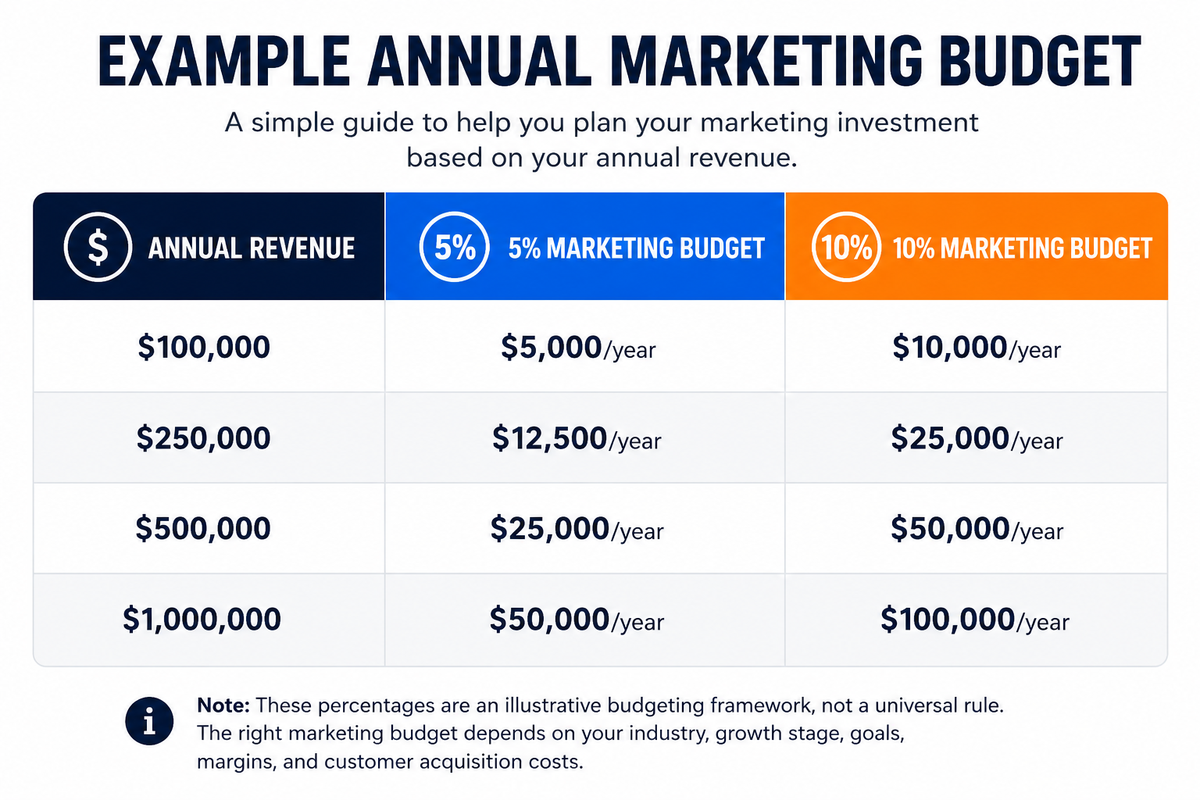
These numbers are examples for planning, not strict rules. Your business may need more or less depending on your industry, competition, and objectives.
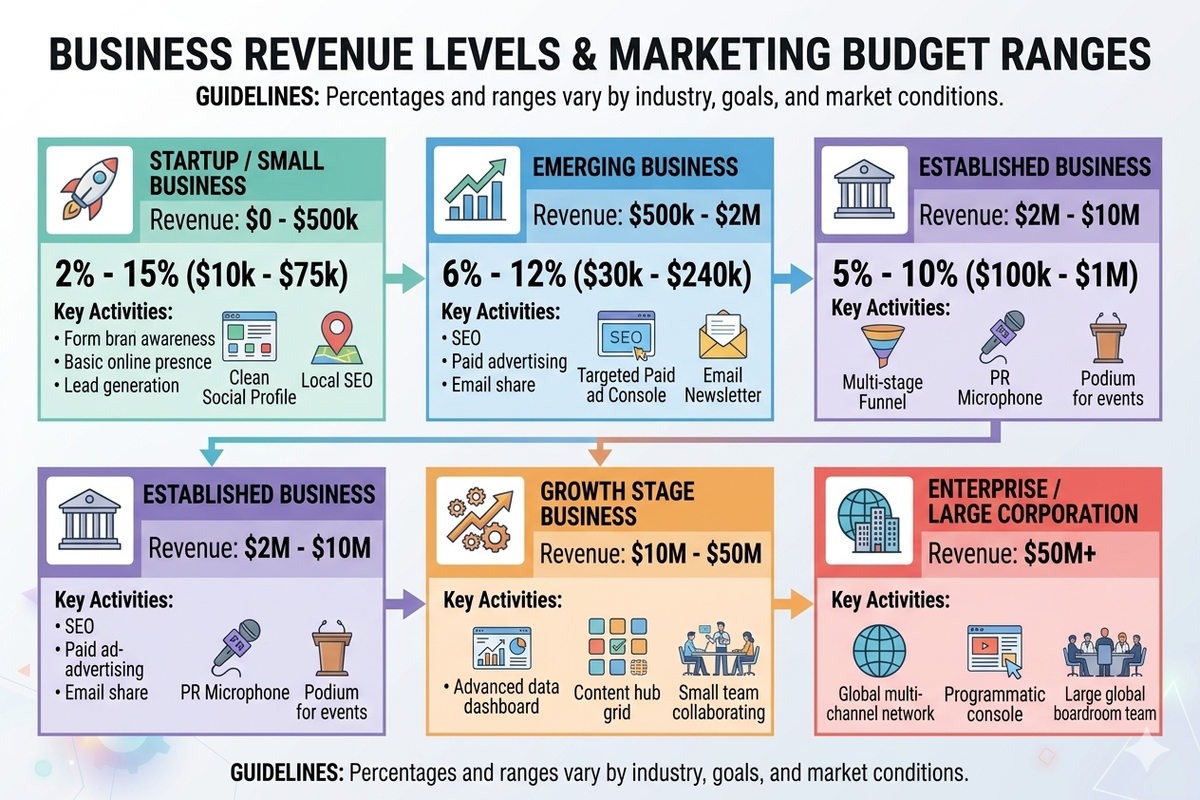
A newer business focused on building awareness may need to invest differently from an established company that already has a strong customer base.
3. Where Should You Spend Your Digital Marketing Budget?
Once you establish your budget, the next question is:
Where should the money go?
Instead of spreading your budget across every digital platform, focus on the channels that can make the biggest difference to your business.
Website Design and Development
Your website is often the first place potential customers go after discovering your business.
A professional website should:
Load quickly
Work well on mobile devices
Clearly explain your products or services
Make contacting you easy
Build trust
Have clear calls-to-action
Be optimized for search engines
If you spend money driving visitors to a poor website, you may lose the customers you're paying to attract.
Your ads bring people to the door. Your website helps convince them to walk in.

4. Invest in SEO to Build Long-Term Visibility
Search engine optimization helps your business appear when potential customers search for products or services you offer.
For example, someone might search:
"Website designer near me"
or
"Best digital marketing agency in Hamilton."
If your website is properly optimized, your business has a better opportunity to appear in relevant searches.
SEO can include:
Keyword research
On-page SEO
Technical SEO
Local SEO
Content creation
Link building
Google Business Profile optimization
Unlike some forms of advertising, SEO can continue generating visibility after the initial work has been completed.

5. Use Paid Advertising for Faster Results
SEO can take time. Paid advertising can help businesses reach potential customers more quickly.
Depending on your business, you could consider:
Google Ads
Facebook Ads
Instagram Ads
LinkedIn Ads
YouTube Ads
Retargeting campaigns
However, don't assume that increasing your advertising budget automatically means more sales.
Your results also depend on your:
Ad → Landing Page → Offer → Follow-Up → Conversion
If one part of the process is weak, increasing your ad spend may simply increase your losses.

6. Don't Ignore Content Marketing
People don't always buy the first time they discover a business.
Content helps you stay visible while building credibility and trust.
Your content could include:
Blog posts
Social media posts
Videos
Guides
Case studies
Infographics
Email newsletters
Educational content
For example, a financial consultant could publish a blog about "5 Common Tax Mistakes Small Businesses Make."
Someone searching for that information may discover the consultant and eventually become a customer.

7. Consider Your Business Stage
Your marketing budget should reflect where your business currently is.
New Business
A new business may need to prioritize:
Website development
Branding
Local SEO
Social media
Content
Customer reviews
Initial advertising
The objective is to build visibility and credibility.
Growing Business
A growing business may focus more heavily on:
Lead generation
Paid advertising
SEO
Content marketing
Conversion optimization
Customer retention
The objective is to increase qualified leads and sales.
Established Business
An established company might invest in:
Brand awareness
Market expansion
Advanced SEO
Retargeting
Marketing automation
Customer loyalty
The objective is to protect market share and continue growing.

8. Don't Spend Your Entire Budget on Advertising
One common mistake is putting almost the entire marketing budget into paid ads.
Imagine spending $2,000 on advertising and sending hundreds of potential customers to a website that:
Loads slowly
Looks outdated
Isn't mobile-friendly
Has confusing navigation
Doesn't explain the offer clearly
Makes it difficult to contact the business
You may get traffic but still struggle to generate customers.
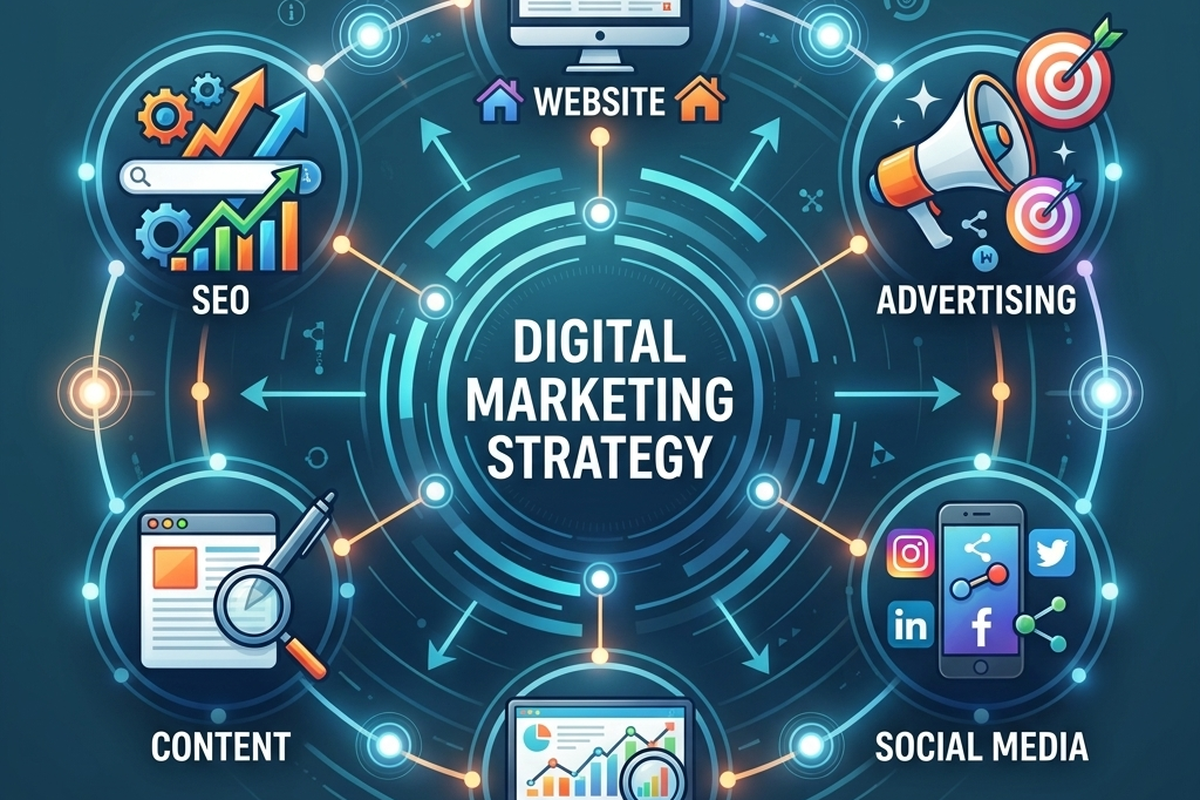
A stronger approach is to build the foundation first:
Website + SEO + Content + Advertising + Conversion Strategy
When these elements work together, your marketing budget can work much harder.
9. Measure Your Marketing Results
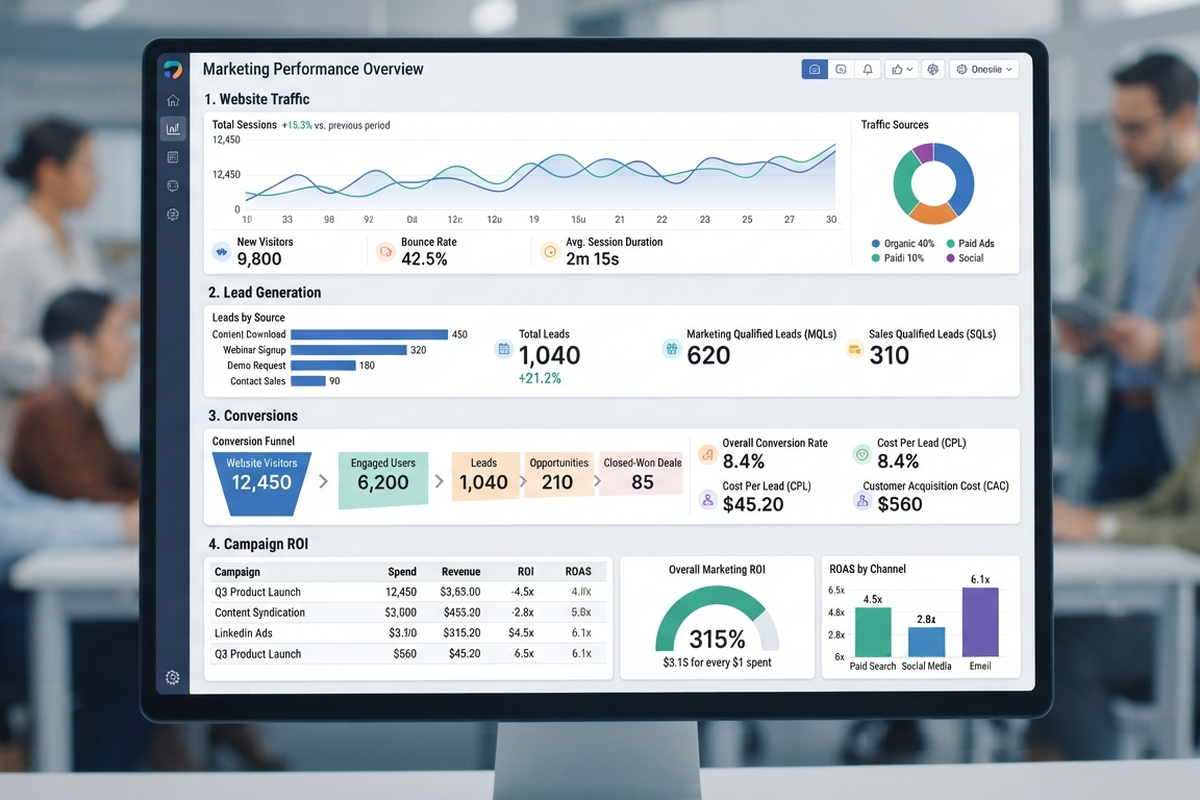
Your marketing budget shouldn't be based on guesswork.
Track metrics such as:
Website traffic
Leads
Phone calls
Form submissions
Sales
Conversion rate
Cost per lead
Customer acquisition cost
Return on ad spend
For example, spending $1,000 and generating 20 qualified leads is more meaningful than simply saying:
"We spent $1,000 on marketing."
The real question is:
"What did we get from that investment?"
Tracking results helps you identify what works and where your money should go next.
10. Start With What You Can Sustain
You don't need a huge marketing budget to begin.
A small business might start with a manageable monthly budget and increase it as it learns what produces results.
For example:
$500/month
Focus on foundational activities such as:
SEO
Content
Website improvements
Local visibility
$1,000/month
You could combine:
SEO
Content
Social media
A focused paid advertising campaign
$2,500+/month
You may have room for a broader strategy involving:
Website optimization
SEO
Content marketing
Paid advertising
Social media
Analytics
Conversion optimization
The important thing is to start strategically rather than simply spending more.
Spend Smarter, Not Just More
So, how much should a small business spend on digital marketing in 2026?
There isn't a magic number. Your ideal budget should be based on your revenue, business stage, competition, customers, and growth objectives.
More importantly, your budget should work as part of a complete strategy. A strong website, effective SEO, valuable content, targeted advertising, and consistent measurement can work together to turn your marketing investment into visibility, leads, customers, and growth.
Don't focus only on how much you're spending. Focus on what your marketing investment is producing.
Ready to Make Your Marketing Budget Work Harder?
At Melo Digitals, we help businesses build and manage digital marketing strategies that bring their online presence together, from website development and SEO to content marketing, branding, paid advertising, and digital strategy.
Stop guessing where your marketing budget should go. Let's build a strategy that fits your business and your goals.
Contact Melo Digitals today and take the next step toward smarter digital growth.
